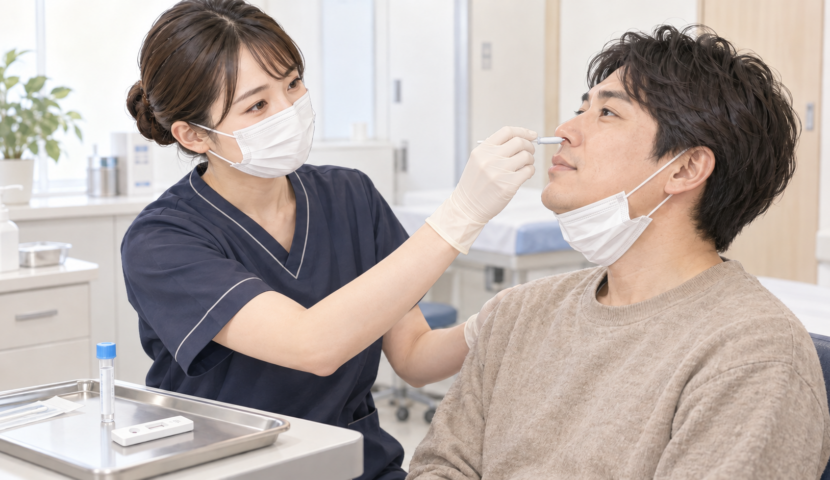
「インフルエンザの検査なのに、綿棒が鼻の入口あたりまでしか入りませんでした。きちんと検査できていますか?」というご質問をいただきました。以前に鼻の奥から採る検査を受けた方は、浅く感じて不安になるかもしれません。
検体を採る場所は、使うキットによって違います。鼻の手前側で採取することが、決められた方法になっている製品もあります。
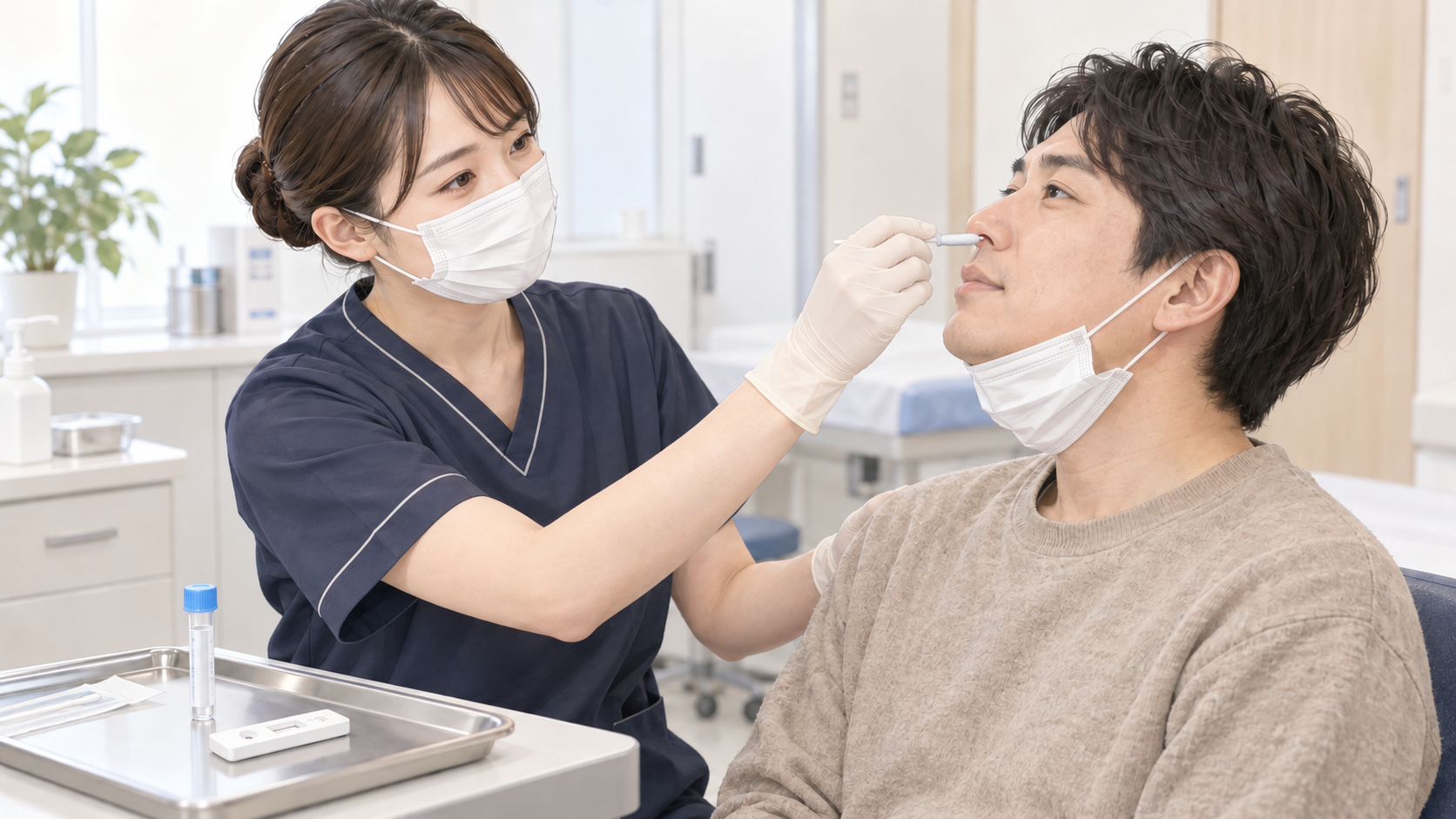
鼻の手前側と、奥から採る検査があります
鼻の中から採る「鼻腔ぬぐい液」と、さらに奥の鼻とのどの境目で採る「鼻咽頭ぬぐい液」は、採取する場所が異なります。検査によって対応する検体や綿棒が決まっています。
大切なのは、どれだけ奥に入ったかではなく、その製品に合う場所と方法で採取することです。痛みが少なかったことも、検査が不十分だった証拠にはなりません。[1][3]
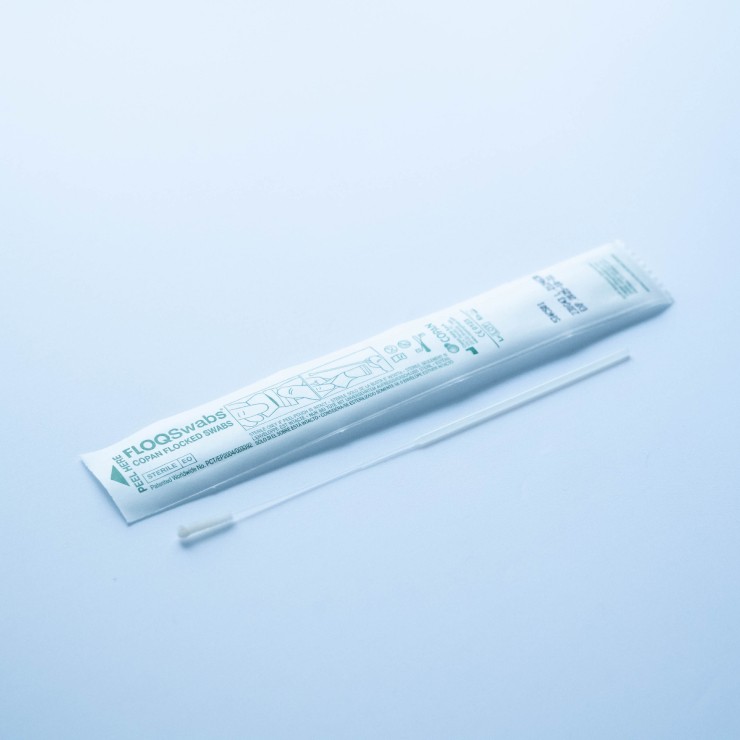
綿棒の形も違います
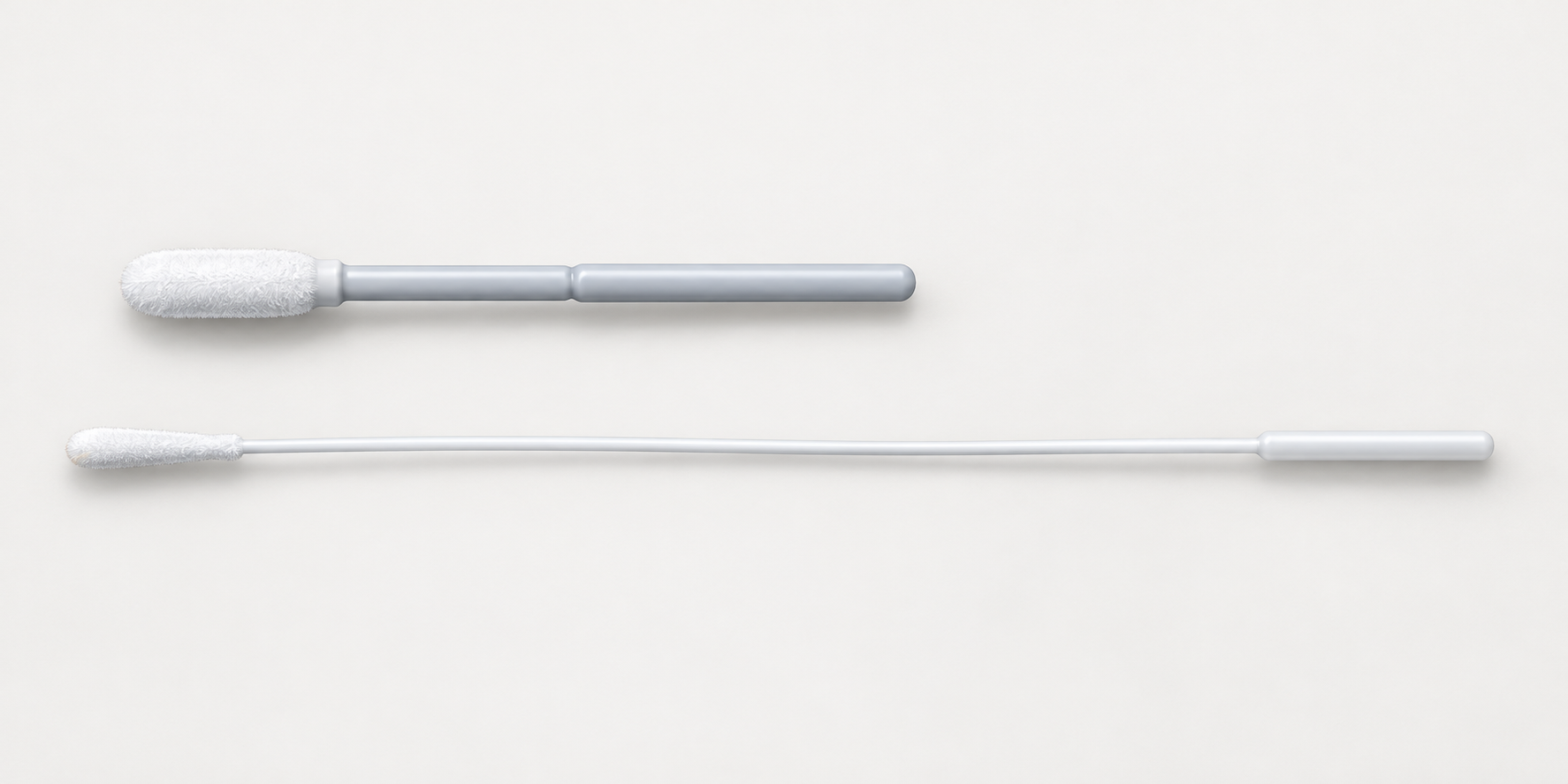
綿棒の長さや形は製品によって異なります。検査には、そのキットで指定された綿棒を使います。
当院のキットと、採取方法の使い分け
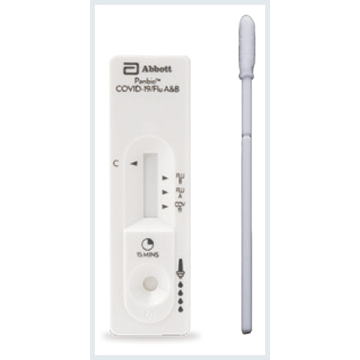
当院では、アボット社の「Panbio COVID-19/Flu A&B パネル(鼻腔ぬぐい液用)」を採用しています。鼻腔から採取する検体で、新型コロナウイルスとインフルエンザA型・B型を調べるキットです。[1]
メーカーの電子添文に沿って採取・検査を行っています。「入口だけを軽く触ればよい」という意味ではなく、決められた方法で鼻の中の検体を採ります。
パンビオには、名前が似た鼻咽頭ぬぐい液用の別製品もあります。鼻の奥から採る検査を行う場合も、実施する検査に対応した方法を使います。鼻腔用と鼻咽頭用を同じものとして扱うわけではありません。[2][3]
キットの納品状況によっては、鼻の奥から検体を採取する検査を行うこともあります。その時に使用するキットと綿棒に合った採取方法で検査します。採取が浅かった場合も深かった場合も、方法の違いだけで不適切な検査とはいえません。
採取する場所と、結果の受け止め方
- キットを確認鼻腔用か鼻咽頭用か、対応する検体を確認。
- 指定の方法で採取鼻腔用では、鼻の手前側が採取部位になります。
- 結果と症状を確認陰性でも、症状が続く・悪化する場合は再相談。
陰性でも「採れなかった」とは限りません
陰性は、今回の検体で検査の判定基準を満たすウイルスの成分が検出されなかった、という結果です。陰性だったことから、採取の失敗と決めつけることはできません。
一方で、正しく検査しても、インフルエンザを完全に否定できるわけではありません。発症からの時間やウイルスの量などにより、感染していても陰性になる「偽陰性」があります。症状、経過、周囲の流行状況も合わせて考えます。[4][5]
「前より浅かった」と感じたときは、遠慮なくお尋ねください。今回使ったキットと採取方法、結果の意味をご説明します。
検査のために、つらい症状を我慢して待たないでください
発症して間もない時期には、検査で捉えられるウイルスの量が少ないことがあります。ただし、検査のために一律に12時間待ってから受診する必要はありません。受診や検査のタイミングは、症状や持病を踏まえて判断します。
「今朝から発熱した」「昨夜から寒気があった」など、症状が始まった時刻をお伝えください。陰性でも、発熱が続く、症状が強くなる、食事や水分がとれないときは、もう一度ご相談ください。再検査や別の検査が必要かは、その時の状態から判断します。
息苦しい、意識や反応がおかしいなど、緊急性の高い症状があるときは、Web予約を待たず救急受診・119番への連絡を検討してください。[6]
よくあるご質問
奥から採ったほうが、必ず正確ですか?
採取の深さだけでは決まりません。使用する検査に適した採取部位と方法を守り、結果を症状と合わせて判断することが大切です。
陰性なら、学校や仕事にすぐ行ってよいですか?
陰性だけで、感染していないと判断することはできません。発熱や体調不良がある間の過ごし方は、診察時の説明や学校・職場の規定も確認してください。
鼻の検査が苦手です。
採取前にスタッフへお伝えください。鼻血が出やすい、鼻の治療や手術を受けたことがあるといった事情もお知らせください。無理に動かず、つらいときは声をかけてください。
参考資料
- Abbott. Panbio COVID-19/Flu A&B パネル(鼻腔ぬぐい液用) / Nasal panel.
- PMDA. Panbio COVID-19/Flu A&B パネル(鼻腔ぬぐい液用)電子添文、2025年2月 第1版 / Japanese instructions for use.
- Abbott. Panbio COVID-19/Flu A&B ラピッド パネル(鼻咽頭ぬぐい液用) / Nasopharyngeal panel, a different product.
- CDC. Diagnosis for Flu: negative rapid tests and clinical assessment.
- CDC. Information for Clinicians on Rapid Diagnostic Testing for Influenza. 2026.
- CDC. Rapid Influenza Diagnostic Tests: interpretation and treatment decisions.
“The swab only went near the entrance of my nose. Was my influenza test done properly?” A shallower swab can feel unfamiliar after a previous deep nasal test.
The collection site depends on the test kit. Some tests are designed for sampling in the front part of the nose.
Nasal and nasopharyngeal specimens are different
A nasal specimen comes from inside the nose. A nasopharyngeal specimen comes from farther back, near the junction of the nose and throat. The chosen test determines the appropriate specimen and swab.
Matching the collection method to the kit matters more than perceived depth or discomfort. Less pain does not demonstrate a poor sample.[1][3]
Swab shapes differ too
Swab length and shape vary by product. Use the swab specified for the chosen kit.
Tests and collection methods at our clinic
We use Abbott’s Panbio COVID-19/Flu A&B Panel (Nasal), which tests a nasal specimen for SARS-CoV-2 and influenza A and B.[1]
We collect and test according to the manufacturer’s Japanese instructions. This does not mean merely touching the outside of the nostril. The nasal specimen is collected using the specified technique.
A similarly named nasopharyngeal Panbio product is a separate kit. When a deeper specimen is needed, the method must match that test; the two products are not interchangeable.[2][3]
Depending on kit deliveries and availability, we may also collect a specimen from farther back in the nose.We use the collection method appropriate to the kit and swab available for that test. A shallower or deeper collection does not by itself mean the test was performed incorrectly.
Sampling and interpreting the result
- Identify the kitCheck the specimen the selected test accepts.
- Use its techniqueA nasal kit samples the front part of the nose.
- Review the resultSeek reassessment if symptoms persist or worsen.
A negative result does not prove a collection failure
A negative result means the tested specimen did not yield a detectable result at that test’s threshold. It does not by itself establish that sampling failed.
A correctly performed rapid test can still miss influenza. Illness timing and viral amount can contribute to a false negative. Symptoms, their course and exposure also matter.[4][5]
Please tell us if the swab felt unusually shallow. We can explain the kit, collection method and result.
Do not delay care just to wait for a test
Very early in illness, there may be less virus to detect. This is not a rule that everyone must wait 12 hours before seeking care. Tell us when symptoms started; timing should be considered with symptoms and medical history.
Contact us again if fever persists, symptoms worsen or you cannot drink adequately. A clinician will decide whether repeat or other testing is needed. Severe breathing difficulty or altered responsiveness requires urgent assessment rather than waiting for an online appointment; call 119 in Japan when necessary.[6]
Questions patients often ask
Is a deeper sample always more accurate?
Depth alone does not determine reliability. The sample must suit the test, and the result must be interpreted clinically.
Can I return to school or work after a negative result?
A negative result alone does not establish that you are not infectious. Follow clinical advice and school or workplace rules while unwell.
I find nasal swabs difficult.
Tell staff beforehand, including any tendency to nosebleeds or previous nasal treatment or surgery. Ask us to pause if sampling is uncomfortable.
References
- Abbott. Panbio COVID-19/Flu A&B パネル(鼻腔ぬぐい液用) / Nasal panel.
- PMDA. Panbio COVID-19/Flu A&B パネル(鼻腔ぬぐい液用)電子添文、2025年2月 第1版 / Japanese instructions for use.
- Abbott. Panbio COVID-19/Flu A&B ラピッド パネル(鼻咽頭ぬぐい液用) / Nasopharyngeal panel, a different product.
- CDC. Diagnosis for Flu: negative rapid tests and clinical assessment.
- CDC. Information for Clinicians on Rapid Diagnostic Testing for Influenza. 2026.
- CDC. Rapid Influenza Diagnostic Tests: interpretation and treatment decisions.
“流感检测时,棉签只进到鼻孔附近,这样能采好吗?”以前做过鼻腔深部采样的人,可能会因这次感觉较浅而担心。
采样位置取决于所用试剂。有些检测就是使用鼻腔前部的标本。
鼻腔标本与鼻咽标本不同
鼻腔标本来自鼻子内部,鼻咽标本来自更深处、鼻子与咽部相接的部位。所用检测规定了适合的标本和棉签。
重要的是采用该产品规定的部位与方法,而不是棉签越深或越痛就越好。疼痛较少也不表示采样不充分。[1][3]
棉签的形状也不同
棉签的长度和形状因产品而异,检测应使用对应试剂指定的棉签。
本院的检测试剂与采样方法
本院使用雅培的Panbio COVID-19/Flu A&B Panel(鼻腔用),用鼻腔标本检测新冠病毒及甲型、乙型流感。[1]
采样和检测按照日本电子说明书进行。这并不意味着只轻碰鼻孔外面,而是按规定在鼻腔内采集标本。
同系列还有名称相似的鼻咽用另一款产品。需要深部采样时,也必须采用对应检测规定的方法,不能把两种试剂混为一谈。[2][3]
根据试剂的到货和供应情况,本院有时也会从鼻腔深部采集标本。我们采用适合当次试剂及棉签的采样方法。不能仅凭采样较浅或较深,就判断检测不当。
采样位置与结果解读
- 确认试剂核对该检测适用的标本。
- 按规定采样鼻腔用试剂采用鼻腔前部标本。
- 结合症状判断症状持续或加重时再次咨询。
阴性不等于采样失败
阴性表示本次标本未达到该检测的阳性判定标准,不能单凭阴性就认定采样失败。
即使操作正确,快速检测也可能漏检流感。发病时间、病毒量等会影响结果,感染者也可能出现“假阴性”。医生还会结合症状、经过和接触史判断。[4][5]
如果觉得这次采样比以前浅,请直接告诉我们,我们会解释试剂、采样方法和结果。
不要为了等待检测而延误就诊
发病很早时,能检测到的病毒量可能较少。但并不是所有人都必须等12小时才就医。请告诉医生症状何时开始,由医生结合病情和基础疾病决定检查时机。
若发热持续、症状加重或无法充分饮水,请再次咨询,医生会决定是否需要复查或其他检测。严重呼吸困难、意识或反应异常时,应及时急诊,不要等待网络预约;在日本必要时拨打119。[6]
常见疑问
采得越深就一定越准确吗?
不能只看深度。需要符合试剂要求,并结合临床情况解读。
阴性后可以马上上学或上班吗?
阴性本身不能证明没有传染性。仍有发热或不适时,请遵循就诊建议及学校、单位规定。
我害怕鼻腔采样。
采样前请告诉工作人员。容易流鼻血、曾接受鼻部治疗或手术等情况也请说明。感到难受时请及时告知。
参考资料
- Abbott. Panbio COVID-19/Flu A&B パネル(鼻腔ぬぐい液用) / Nasal panel.
- PMDA. Panbio COVID-19/Flu A&B パネル(鼻腔ぬぐい液用)電子添文、2025年2月 第1版 / Japanese instructions for use.
- Abbott. Panbio COVID-19/Flu A&B ラピッド パネル(鼻咽頭ぬぐい液用) / Nasopharyngeal panel, a different product.
- CDC. Diagnosis for Flu: negative rapid tests and clinical assessment.
- CDC. Information for Clinicians on Rapid Diagnostic Testing for Influenza. 2026.
- CDC. Rapid Influenza Diagnostic Tests: interpretation and treatment decisions.
«El hisopo solo entró cerca de la entrada de la nariz. ¿Se hizo bien mi prueba de gripe?» Puede resultar extraño si antes le tomaron una muestra más profunda.
La zona de recogida depende del kit. Algunas pruebas están diseñadas para muestras de la parte anterior de la nariz.
Muestra nasal y muestra nasofaríngea
La nasal se recoge dentro de la nariz; la nasofaríngea, más atrás, cerca de la unión de la nariz y la garganta. La prueba elegida determina la muestra y el hisopo adecuados.
Lo importante es usar el lugar y la técnica previstos para el producto. Una toma menos dolorosa no demuestra una recogida deficiente.[1][3]
También cambia la forma del hisopo
La longitud y la forma varían según el producto. Se debe usar el hisopo indicado para cada kit.
Las pruebas y la toma de muestras en nuestra clínica
Utilizamos Panbio COVID-19/Flu A&B Panel (Nasal) de Abbott para detectar SARS-CoV-2 y gripe A y B en una muestra nasal.[1]
Seguimos las instrucciones japonesas del fabricante. No se trata de tocar solamente el exterior de la fosa nasal: se recoge la muestra dentro de la nariz con la técnica indicada.
Existe otro Panbio de nombre similar para muestras nasofaríngeas. Es un producto distinto. Una toma más profunda también debe corresponder a la prueba utilizada; ambos kits no son intercambiables.[2][3]
Según la entrega y disponibilidad de los kits, también podemos recoger una muestra de una zona más profunda de la nariz.Utilizamos la técnica adecuada para el kit y el hisopo de esa prueba. Una toma más superficial o más profunda, por sí sola, no demuestra una prueba mal realizada.
La toma de la muestra y el resultado
- Identificar el kitComprobar qué muestra admite.
- Recoger según el kitEl kit nasal usa la parte anterior de la nariz.
- Valorar la evoluciónVolver a consultar si persiste o empeora.
Un resultado negativo no prueba un fallo de recogida
Significa que la muestra no dio un resultado detectable según el umbral de esa prueba. Por sí solo no demuestra que se recogiera mal.
Una prueba rápida bien realizada también puede pasar por alto la gripe. El momento de la enfermedad y la cantidad de virus influyen. Se consideran además los síntomas, su evolución y las posibles exposiciones.[4][5]
Si la toma le pareció más superficial, díganoslo. Podemos explicar el kit, la técnica y el resultado.
No retrase la atención para esperar una prueba
Al comienzo puede haber menos virus detectable. Esto no significa que todas las personas deban esperar 12 horas antes de consultar. Informe de cuándo empezaron los síntomas; la decisión depende también del estado clínico y las enfermedades previas.
Consulte de nuevo si persiste la fiebre, empeora o no puede beber suficiente. El profesional decidirá si conviene repetir la prueba u otra evaluación. La dificultad respiratoria intensa o una respuesta o conciencia alteradas requieren atención urgente, sin esperar una cita web; en Japón, llame al 119 si es necesario.[6]
Preguntas frecuentes
¿Una toma más profunda es siempre más precisa?
No depende solo de la profundidad. La muestra debe ajustarse a la prueba y el resultado interpretarse clínicamente.
¿Puedo volver al trabajo o a clase con un negativo?
El negativo no demuestra por sí solo que no pueda contagiar. Mientras se encuentre mal, siga el consejo clínico y las normas del centro.
Me cuesta tolerar la toma nasal.
Avise antes, especialmente si tiene sangrados nasales frecuentes o antecedentes de tratamiento o cirugía nasal. Díganos si necesita una pausa.
Referencias
- Abbott. Panbio COVID-19/Flu A&B パネル(鼻腔ぬぐい液用) / Nasal panel.
- PMDA. Panbio COVID-19/Flu A&B パネル(鼻腔ぬぐい液用)電子添文、2025年2月 第1版 / Japanese instructions for use.
- Abbott. Panbio COVID-19/Flu A&B ラピッド パネル(鼻咽頭ぬぐい液用) / Nasopharyngeal panel, a different product.
- CDC. Diagnosis for Flu: negative rapid tests and clinical assessment.
- CDC. Information for Clinicians on Rapid Diagnostic Testing for Influenza. 2026.
- CDC. Rapid Influenza Diagnostic Tests: interpretation and treatment decisions.
“독감 검사인데 면봉이 코 입구 근처까지만 들어갔어요. 제대로 검사한 건가요?” 이전에 깊은 채취를 경험했다면 이번 검사가 얕게 느껴져 걱정될 수 있습니다.
채취 위치는 검사 키트에 따라 다릅니다. 코 앞쪽의 검체를 사용하도록 정해진 제품도 있습니다.
비강 검체와 비인두 검체는 다릅니다
비강 검체는 코 안에서, 비인두 검체는 더 깊은 코와 목의 경계 근처에서 채취합니다. 사용하는 검사에 따라 검체와 면봉이 정해져 있습니다.
중요한 것은 제품에 맞는 부위와 방법으로 채취하는 것입니다. 덜 아팠다는 것이 검체가 부족했다는 증거는 아닙니다.[1][3]
면봉의 모양도 다릅니다
면봉의 길이와 모양은 제품마다 다릅니다. 해당 키트에서 지정한 면봉을 사용해야 합니다.
본원의 검사 키트와 채취 방법
본원은 Abbott의 Panbio COVID-19/Flu A&B Panel (Nasal)을 사용합니다. 비강 검체로 코로나19 바이러스와 인플루엔자 A형·B형을 검사합니다.[1]
일본 전자 첨부문서에 따라 채취하고 검사합니다. 코 입구 바깥만 살짝 건드린다는 뜻이 아니라 정해진 방식으로 코 안에서 검체를 얻습니다.
이름이 비슷한 비인두용 Panbio는 별도 제품입니다. 깊은 채취가 필요한 경우도 해당 검사에 맞는 방법을 사용하며 두 제품을 같은 것으로 취급하지 않습니다.[2][3]
키트 납품 및 공급 상황에 따라 코 깊은 곳에서 검체를 채취하는 검사도 시행할 수 있습니다.해당 검사에서 사용하는 키트와 면봉에 맞는 방법으로 채취합니다. 얕거나 깊게 채취했다는 사실만으로 검사가 부적절했다고 판단할 수는 없습니다.
채취 위치와 결과 해석
- 키트 확인검사에 맞는 검체 종류를 확인합니다.
- 지정 방법으로 채취비강용은 코 앞쪽에서 검체를 얻습니다.
- 증상과 함께 판단지속되거나 악화되면 다시 상담합니다.
음성이라고 채취 실패는 아닙니다
음성은 이번 검체에서 해당 검사의 판정 기준을 충족하는 결과가 나오지 않았다는 뜻입니다. 음성만으로 채취 실패라고 단정할 수 없습니다.
올바르게 검사해도 독감을 완전히 배제할 수는 없습니다. 발병 시점과 바이러스 양 등에 따라 감염된 사람도 ‘위음성’이 나올 수 있습니다. 증상, 경과, 접촉 상황도 함께 봅니다.[4][5]
전보다 얕게 느껴졌다면 질문해 주세요. 사용한 키트와 채취 방법, 결과를 설명드리겠습니다.
검사를 기다리려고 진료를 늦추지 마세요
발병 초기에는 검출되는 바이러스가 적을 수 있습니다. 그러나 모두가 12시간을 기다린 뒤 진료받아야 하는 것은 아닙니다. 증상 시작 시각을 알려주시고 증상과 기저질환을 고려해 검사 시점을 상담하세요.
열이 계속 나거나 악화되거나 물을 충분히 마시지 못하면 다시 상담하세요. 재검사나 다른 검사의 필요성은 의료진이 판단합니다. 심한 호흡곤란이나 의식·반응 이상은 온라인 예약을 기다리지 말고 응급 진료를 받아야 하며 일본에서는 필요시 119에 연락하세요.[6]
자주 묻는 질문
깊게 채취하면 항상 더 정확한가요?
깊이만으로 결정되지 않습니다. 검사에 맞는 검체가 필요하고 증상과 함께 해석해야 합니다.
음성이면 바로 출근하거나 등교해도 되나요?
음성만으로 전염 가능성이 없다고 할 수 없습니다. 발열이나 불편감이 있다면 진료 안내와 학교·직장 규정을 확인하세요.
코 검사가 힘듭니다.
채취 전에 알려주세요. 코피가 잘 나거나 코 치료·수술 이력이 있다면 말씀해 주세요. 힘들면 잠시 멈춰 달라고 요청하세요.
참고 자료
- Abbott. Panbio COVID-19/Flu A&B パネル(鼻腔ぬぐい液用) / Nasal panel.
- PMDA. Panbio COVID-19/Flu A&B パネル(鼻腔ぬぐい液用)電子添文、2025年2月 第1版 / Japanese instructions for use.
- Abbott. Panbio COVID-19/Flu A&B ラピッド パネル(鼻咽頭ぬぐい液用) / Nasopharyngeal panel, a different product.
- CDC. Diagnosis for Flu: negative rapid tests and clinical assessment.
- CDC. Information for Clinicians on Rapid Diagnostic Testing for Influenza. 2026.
- CDC. Rapid Influenza Diagnostic Tests: interpretation and treatment decisions.
患者さんから「前の検査より浅かったので、陰性は採り方のせいでは」と聞かれたときは、まず使用した製品と検体種を説明します。痛みや挿入の深さを、検体品質の代わりに評価しないことが要点です。
最初に検体種と製品を照合する
当院の採用品はPanbio COVID-19/Flu A&B パネル(鼻腔ぬぐい液用)です。鼻咽頭用の「ラピッド パネル」は別製品です。同じメーカー・シリーズだから検体種を変えてよい、という扱いはしません。[1][3]
電子添文を原本で確認し、対応検体、付属綿棒、採取、抽出、判定条件を製品ごとに照合します。国内承認製品の説明には、日本の電子添文を用います。
納品状況によって、鼻の奥から採取する検査を行う場合もあります。使用するキット・綿棒と採取部位をその都度照合し、患者さんには今回の採取方法を説明します。「当院は必ず浅く採る」という案内にはしません。
綿棒の形も違います
綿棒の長さや形は製品によって異なります。検査には、そのキットで指定された綿棒を使います。
鼻腔用パンビオの採取確認
2025年2月版の電子添文では、付属綿棒を口蓋と平行に挿入し、鼻甲介部で最初に抵抗を感じる位置(目安約2cm)で鼻腔壁を5回転擦り、同じ綿棒でもう一方の鼻孔からも採取します。両鼻孔からの採取が指定されています。[2]
「鼻の入口」と説明する場合も、外側に触れるだけという意味に受け取られないようにします。抵抗を越えて無理に挿入することや、痛みの強さで十分な採取と判断することは避けます。本文は院内の実技教育や最新版の手順確認に代わるものではありません。
採取する場所と、結果の受け止め方
- 製品・検体を照合鼻腔用と鼻咽頭用を区別し、指定手順を確認。
- 採取と検査を点検採取部位・綿棒・抽出・判定時間を添文と照合。
- 臨床評価とフォロー症状・リスクを評価し、再相談の目安を共有。
陰性の意味を患者さんへ説明する
抗原検査は、ウイルスの成分を検出する検査です。陰性は「採取失敗」の診断でも、「感染なし」の証明でもありません。発症時刻、接触歴、症状の推移、地域の流行を合わせて評価します。[4][5]
「今回は鼻の手前側から採れる製品を使っています。決められた方法で採りました。陰性は採取が失敗したという意味ではありません。ただ、検査で捉えきれない時期もあるので、熱や症状が続く場合はもう一度ご相談ください。」
コントロールラインは判定の成立確認に使いますが、採取した検体量が十分だったことまで単独で保証するものではありません。採取の手技に疑問がある場合は、結果とは別に手順を振り返ります。
陰性後に確認すること
- 経過:いつ何が始まり、改善・持続・悪化のどれか。
- 重症度:呼吸状態、反応、飲水、全身状態。
- 背景:妊娠、高齢、慢性疾患など、合併症リスクや治療判断に関わる情報。
- 検査:採取部位・手技、保管、抽出、判定時間を当該添文と照合。
- 次の行動:再診の目安、追加検査や治療の必要性を医師に相談。
再検査・核酸検査等の必要性は臨床状況から判断し、当院で未確認の検査を実施可能と案内しないようにします。インフルエンザが強く疑われる患者さんの治療判断を、陰性だけで終わらせないことが重要です。[6]
一律の待機時間を案内しない
発症初期に陰性が出ることはありますが、「12時間までは受診しない」「48時間を過ぎると治療の意味がない」という一律の案内は避けます。重症度や背景により、検査を待たず診療・治療判断が必要な場合があります。[6]
検査の不安を否定せず、使用した製品と採取方法を具体的に説明し、陰性後の過ごし方と再相談の目安まで伝えます。
参考資料
- Abbott. Panbio COVID-19/Flu A&B パネル(鼻腔ぬぐい液用) / Nasal panel.
- PMDA. Panbio COVID-19/Flu A&B パネル(鼻腔ぬぐい液用)電子添文、2025年2月 第1版 / Japanese instructions for use.
- Abbott. Panbio COVID-19/Flu A&B ラピッド パネル(鼻咽頭ぬぐい液用) / Nasopharyngeal panel, a different product.
- CDC. Diagnosis for Flu: negative rapid tests and clinical assessment.
- CDC. Information for Clinicians on Rapid Diagnostic Testing for Influenza. 2026.
- CDC. Rapid Influenza Diagnostic Tests: interpretation and treatment decisions.
When a patient attributes a negative result to a shallower-feeling swab, explain the actual kit and specimen first. Perceived depth and pain are not substitutes for assessing specimen quality.
Match the product to the specimen
Our clinic uses Panbio COVID-19/Flu A&B Panel (Nasal). The nasopharyngeal Rapid Panel is a different product. A shared manufacturer or product family does not permit switching specimen types.[1][3]
Check the Japanese instructions for the approved specimen, supplied swab, collection, extraction and reading conditions. Use the instructions applicable to the locally approved product.
Kit supply may also lead us to use a test requiring deeper nasal collection.Match the kit, swab and collection site each time and explain the method for that visit. Do not tell patients that all sampling at our clinic is shallow.
Swab shapes differ too
Swab length and shape vary by product. Use the swab specified for the chosen kit.
Collection checks for the nasal panel
The February 2025 Japanese instructions specify a swab parallel to the palate, reaching first resistance at the nasal turbinate (approximately 2cm), five rotations against the nasal wall, and sampling the other nostril with the same swab. Both nostrils are required.[2]
“Near the entrance” must not imply touching only the outside. Do not force past resistance or use pain as evidence of adequacy. This article is not a substitute for practical training or checking current instructions.
Sampling and interpreting the result
- Match product and specimenDistinguish nasal from nasopharyngeal kits.
- Check collection and testingReview the process against the applicable instructions.
- Assess and follow upReview symptoms and risks; agree when to return.
Explain what a negative result means
Antigen tests detect viral components. A negative is neither a diagnosis of sampling failure nor proof of no infection. Review onset, exposure, symptom evolution and local circulation.[4][5]
“This kit is designed for a specimen from the front part of the nose. We used its specified method. A negative does not mean the collection failed. A test can still miss infection, so please contact us again if symptoms persist.”
The control line helps assess whether the test run is valid; it cannot independently guarantee an adequate specimen collection. Review any concern about technique separately from the result.
Review the patient after a negative
- Course: onset, improvement, persistence or deterioration.
- Severity: breathing, responsiveness, hydration and overall condition.
- Background: pregnancy, age and chronic illness relevant to complication risk.
- Process: specimen, collection, storage, extraction and reading time against the instructions.
- Follow-up: agree on reassessment and discuss further testing or treatment with the clinician.
Repeat or molecular testing depends on context; do not advertise an unconfirmed clinic capability. A negative antigen result alone should not end assessment or determine treatment in a strongly suspected case.[6]
Avoid blanket waiting-time instructions
An early false negative is possible, but do not tell all patients to avoid care for 12 hours or that treatment has no value after 48 hours. Severity and risk may require clinical decisions without waiting for testing.[6]
Acknowledge the concern, explain the specific product and method, and provide practical follow-up advice.
References
- Abbott. Panbio COVID-19/Flu A&B パネル(鼻腔ぬぐい液用) / Nasal panel.
- PMDA. Panbio COVID-19/Flu A&B パネル(鼻腔ぬぐい液用)電子添文、2025年2月 第1版 / Japanese instructions for use.
- Abbott. Panbio COVID-19/Flu A&B ラピッド パネル(鼻咽頭ぬぐい液用) / Nasopharyngeal panel, a different product.
- CDC. Diagnosis for Flu: negative rapid tests and clinical assessment.
- CDC. Information for Clinicians on Rapid Diagnostic Testing for Influenza. 2026.
- CDC. Rapid Influenza Diagnostic Tests: interpretation and treatment decisions.