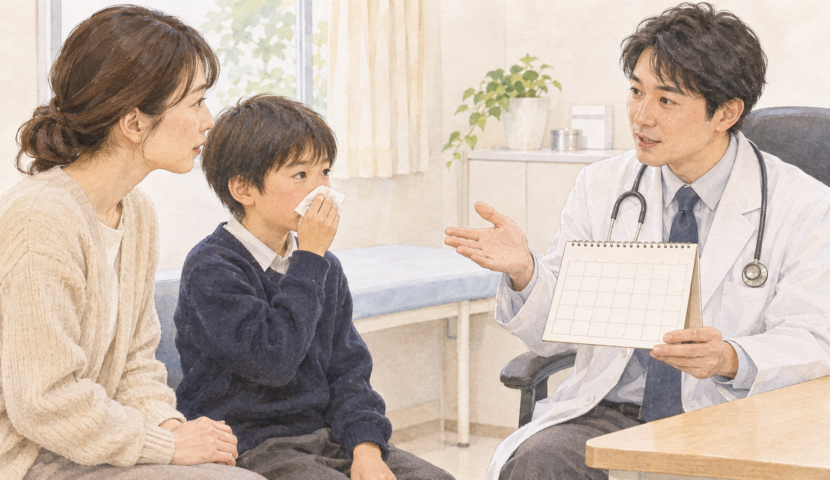
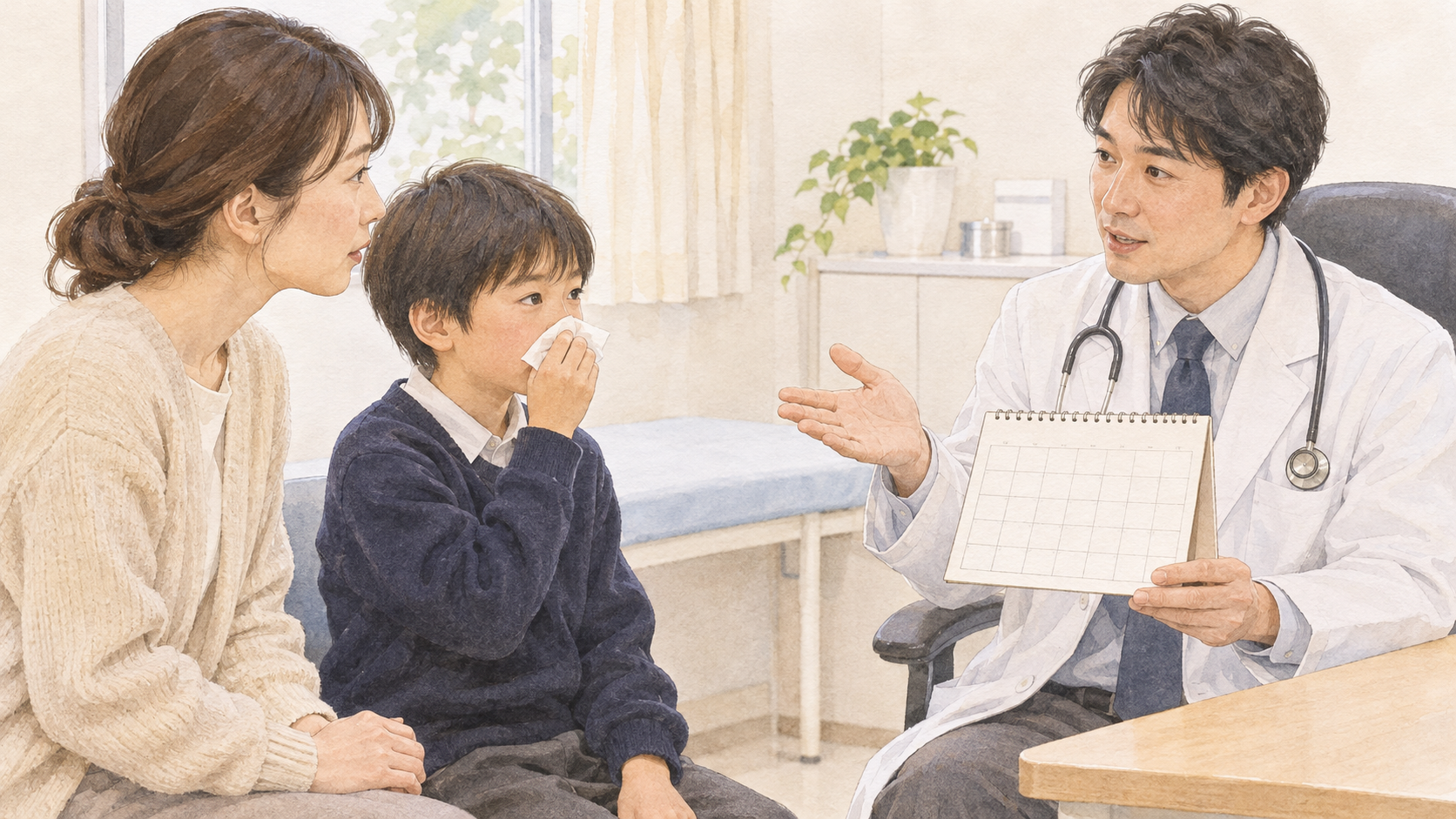
「鼻水が黄色くなりました。抗生剤は必要ですか? 副鼻腔炎でしょうか?」
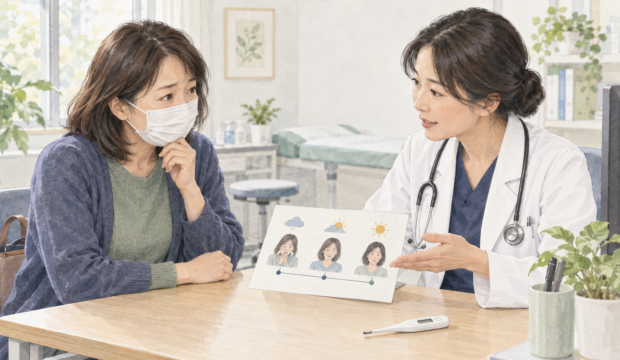
黄色くなっただけでは、どちらも判断できません。ウイルスによるかぜの途中でも鼻水には色がつきます。診察では、いつ症状が始まり、その後良くなっているのか、いったん良くなってから悪くなったのかを確かめます。[1] [5] [7]
Q. かぜでも鼻水が黄色や緑になるのはなぜですか?
ウイルスによるかぜでも、鼻の粘膜が炎症を起こすと、体を守る白血球が集まります。白血球などが鼻水に混じると、透明だった鼻水が白く濁ったり、黄色や緑色に見えたりします。細菌が関わる副鼻腔炎でも似た見た目になるので、ティッシュについた色から原因を見分けることはできません。[7] [8]
かぜでは、症状が出てから数日で鼻水が濁ってくることがあります。鼻水や咳だけは、ほかの症状が良くなったあともしばらく残ることがあります。色がまだついていても、熱が下がり、鼻づまりや咳が軽くなってきているなら、回復に向かっているかを見るほうが役に立ちます。[5] [7]
Q. 黄色い鼻水なら、細菌感染の可能性は高いですか?
黄色い鼻水が出た人全体で、何割が細菌感染なのかは、この研究からは分かりません。 この研究は、黄色い鼻水が出た人を広く集めて、感染の有無を調べたものではありません。対象は、診察で副鼻腔炎が疑われた外来患者さんです。また、調べたのは「黄色」だけではなく、粘り気や濁りも含めて膿っぽく見える鼻水でした。[1]
その集団でも、膿っぽい鼻水は細菌性副鼻腔炎の可能性をわずかに上げる程度の手がかりでした。細菌性でも鼻水が膿っぽくない人はいますし、膿っぽくても細菌性と確認されない人はいます。家庭で見た色を、そのまま「細菌がいる確率」に置き換えることはできません。[1]
- 熱が下がり、体調も良くなってきた
- かぜの回復途中にも黄色い鼻水が出ます。熱や体調が良くなっているかを見ながら、様子を見ます。
- いったん下がった熱が戻り、頬が痛くなった
- 副鼻腔炎などを調べるため、受診してください。熱が戻った日と、頬が痛み始めた日を診察で伝えましょう。
Q. 副鼻腔炎とは、どんな病気ですか?
副鼻腔は、鼻の奥からつながる、頬や額の骨の中にある空洞です。かぜで粘膜が腫れると、分泌物が出にくくなり、鼻づまりや頬の重さが出ることがあります。副鼻腔に炎症があっても、ウイルスが原因で自然に良くなる場合があります。[5] [6]
一方で、しばらくたっても症状が軽くならない、良くなりかけて熱や痛みがぶり返す、片側の頬や上の歯が強く痛む、といった経過なら診察が必要です。診察では、かぜの経過なのか、細菌が関わる副鼻腔炎や中耳炎などがないかを確かめます。[5] [6]
Q. 抗生剤を飲む前に、副鼻腔炎かどうかはどう調べますか?
鼻水が長引く、熱がぶり返す、頬が痛むときは、抗生剤を飲む前に診察を受けましょう。 医師は、いつから症状があるかを聞き、鼻の中の腫れや分泌物、頬や額の痛みを診ます。診察で副鼻腔炎が疑われ、画像で確認すると治療方針が決まる場合は、副鼻腔を写すレントゲンやCTを検討します。 [5] [13]
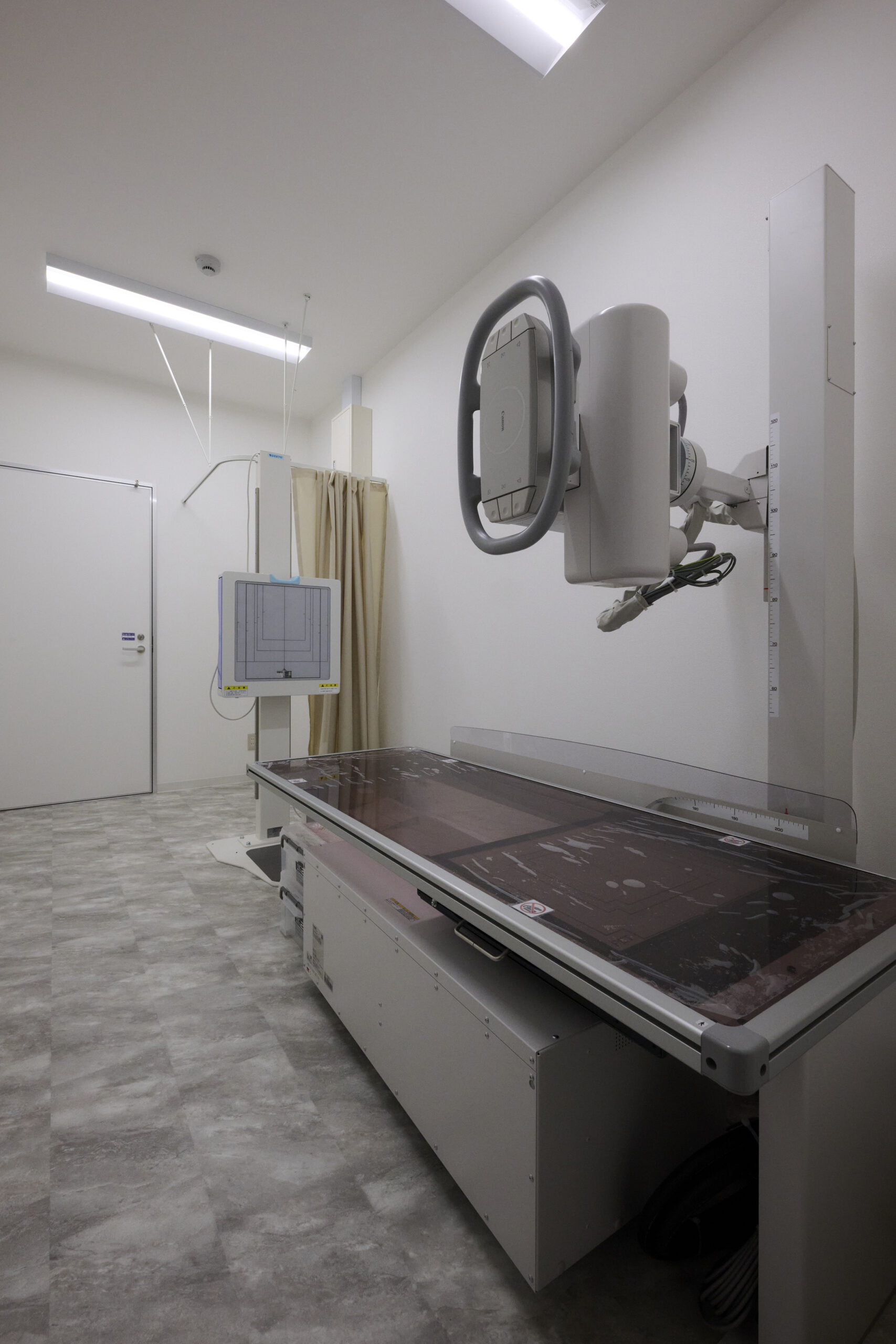
副鼻腔のレントゲンでは、頬の奥の空洞に白い影があるかを見ることができます。 成人で画像検査が役立ち、CTが利用できない場合などに、診察を補う検査として選ぶことがあります。白い影はかぜでも見えるため、画像と熱や痛みの経過を合わせて抗生剤の要否を判断します。 [13]
片側だけの症状が続く、何度も繰り返すなど、原因を詳しく調べたいときは、耳鼻咽喉科で鼻の奥を内視鏡で診たり、CTで調べたりします。目の周りの腫れや見え方の異常があれば、早急に病院で診察を受け、必要なCTやMRIで炎症の広がりを調べます。 [6] [9] [10]
Q. 抗生剤を飲めば、鼻水も体調も早く良くなりますか?
急に出た膿っぽい鼻水を対象とした4つの比較試験(計723人)をまとめると、抗菌薬で鼻水が続く人が減るかははっきりせず、副作用は増えていました。[2]
12歳以上を対象とした別の比較では、膿っぽい鼻水が消えた人が全体の4分の3に達するまで、アモキシシリンを飲んだ群では9日、偽薬を飲んだ群では14日でした。ただし、患者さんが最もつらいと感じた症状の改善や、体調不良・痛みの期間には明らかな差がなく、下痢は薬を飲んだ群で多くみられました。鼻水だけが少し早く治まる可能性と、本人のつらさを減らせるかは、別に考える必要があります。[3]
Q. 子どもの副鼻腔炎に、抗生剤が役立つのはどんなときですか?
鼻水や咳が長引く、またはいったん良くなってから悪化し、診察で急性副鼻腔炎と判断された2〜11歳の子どもの試験では、抗菌薬を使うと症状が治まるまでの中央値が9日から7日に短くなりました。この短縮に、鼻水の色による明確な違いはなく、薬を使った群では下痢が多くみられました。[4]
ここで抗菌薬を検討するきっかけになったのは、鼻水が黄色いことではなく、症状が長引いたり悪化したりしたことです。かぜをひいてまだ数日で、鼻水の色だけが変わった子どもに、その結果をそのまま当てはめることはできません。[4] [5]
Q. 抗生剤が必要ないとき、どんな薬を処方してもらえますか?
頬の痛みや発熱がつらいときは、アセトアミノフェンなどの解熱鎮痛薬を処方することがあります。 年齢や持病、いま飲んでいる薬を確認し、使える薬を選びます。アレルギー性鼻炎も鼻づまりの原因になっている場合は、その治療としてステロイドの点鼻薬を処方することがあります。 [14] [15]
様子を見ると決めたら、熱・痛み・咳が軽くなっているかを確認し、悪くなった場合の受診の目安を決めておきます。 抗菌薬が必要になったかどうかは、色の変化ではなく、その後の経過と再診時の所見から判断します。[5] [6] [9]
Q. どんなときに受診し、何を伝えればよいですか?
10日ほどたっても良くならない、いったん治まりかけた熱や咳がぶり返した:副鼻腔炎などがないか、受診して相談してください。鼻水や軽い咳が残っていても、日ごとに良くなっている場合とは判断が変わります。[5] [6] [7]
高熱や強い顔の痛みがある:10日まで待たずに相談してください。特に、片側の頬や上の歯が強く痛むときは、その場所も伝えてください。[5] [6]
目の周りが腫れる、物が二重に見える、急に見えにくい、額に強い頭痛がある:副鼻腔炎の合併症が疑われるため、早急に医療機関を受診してください。[6]
受診時は、鼻水が出始めた日、熱の経過、一度良くなった時期があればその日を伝えてください。前に処方された抗菌薬が残っていても、今回の鼻水の色を理由に自己判断で飲まないでください。
参考文献
- Ebell MH, et al. Accuracy of Signs and Symptoms for the Diagnosis of Acute Rhinosinusitis and Acute Bacterial Rhinosinusitis. Ann Fam Med. 2019;17:164–172(表4)
- Kenealy T, Arroll B. Antibiotics for the common cold and acute purulent rhinitis. Cochrane Database Syst Rev. 2025;11:CD000247.
- De Sutter AI, et al. Does amoxicillin improve outcomes in patients with purulent rhinorrhea? J Fam Pract. 2002;51:317–323.
- Shaikh N, et al. Identifying Children Likely to Benefit From Antibiotics for Acute Sinusitis. JAMA. 2023;330:349–358.
- 厚生労働省.抗微生物薬適正使用の手引き 第四版 医科・外来編(2026年)pp.29–30、59–61.
- NICE. Sinusitis (acute): antimicrobial prescribing (NG79).
- CDC. Preventing and Treating Common Cold.
- Gern JE, et al. Relationship of upper and lower airway cytokines to outcome of experimental rhinovirus infection. Am J Respir Crit Care Med. 2000;162:2226–2231.
- AAO-HNSF. Clinical Practice Guideline: Adult Sinusitis Update(2025年、画像検査と対症療法)
- American College of Radiology. ACR Appropriateness Criteria® Sinonasal Disease(副鼻腔炎の画像検査)
- American Academy of Pediatrics. Clinical Practice Guideline for Acute Bacterial Sinusitis in Children Aged 1 to 18 Years(2013年)
- 日本医学放射線学会.画像診断ガイドライン2021年版「成人副鼻腔炎においてCTは推奨されるか?」
- PMDA.アセトアミノフェン錠の電子添文
- PMDA.フルチカゾンフランカルボン酸エステル点鼻液の電子添文
Summary in English
Yellow or green mucus is common during a viral cold. A change in color alone does not tell you whether bacteria are causing a sinus infection. [7]
What the studies found
In people evaluated for suspected sinusitis, thick, pus-like discharge was only a weak clue to bacterial infection. The studies recruited people who were already being evaluated for sinusitis and assessed pus-like discharge, not yellow color alone. They do not tell us what fraction of people with yellow mucus have a bacterial infection. The same color can appear during an ordinary cold. If someone is improving, a change in color alone is not a reason to start antibiotics. [1]
Trials of acute purulent rhinitis found no clear overall benefit and more side effects. In children aged 2–11 selected for persistent or worsening sinusitis, antibiotics shortened median recovery from 9 to 7 days, with no clear difference in benefit by discharge color. [2] [4]
When to seek care
Seek care if symptoms have not improved after about 10 days, worsen after getting better, or cause high fever or significant facial pain. Seek urgent medical care for swelling around an eye, double vision, reduced vision, or a severe frontal headache. [5] [6]
Q. How is sinusitis assessed before starting antibiotics?
If symptoms persist, fever returns or your cheek hurts, get examined before taking antibiotics. A clinician will ask how symptoms have changed and examine your nose and face. If imaging could clarify the diagnosis and change treatment, they may consider a sinus X-ray or CT. A plain sinus X-ray can show a shadow in a sinus, but that finding can also occur during a cold. CT is preferred when a more detailed assessment is needed. Persistent symptoms on one side or repeated episodes may warrant an ENT evaluation. Swelling around an eye or changes in vision require urgent care. [5] [9] [13]
For bothersome pain or fever, a clinician can prescribe a suitable medicine such as acetaminophen. If allergic rhinitis is also causing nasal symptoms, a prescription nasal steroid may help. The choice depends on your age, health conditions and current medicines. [14] [15]
References
- Ebell MH, et al. Accuracy of Signs and Symptoms for the Diagnosis of Acute Rhinosinusitis and Acute Bacterial Rhinosinusitis. Ann Fam Med. 2019;17:164–172(表4)
- Kenealy T, Arroll B. Antibiotics for the common cold and acute purulent rhinitis. Cochrane Database Syst Rev. 2025;11:CD000247.
- Shaikh N, et al. Identifying Children Likely to Benefit From Antibiotics for Acute Sinusitis. JAMA. 2023;330:349–358.
- 厚生労働省.抗微生物薬適正使用の手引き 第四版 医科・外来編(2026年)pp.29–30、59–61.
- NICE. Sinusitis (acute): antimicrobial prescribing (NG79).
- CDC. Preventing and Treating Common Cold.
- AAO-HNSF. Clinical Practice Guideline: Adult Sinusitis Update(2025年、画像検査と対症療法)
- American College of Radiology. ACR Appropriateness Criteria® Sinonasal Disease(副鼻腔炎の画像検査)
- Japan Radiological Society. Diagnostic Imaging Guidelines 2021. Adult sinusitis.
- PMDA. Acetaminophen tablets prescribing information.
- PMDA. Fluticasone furoate nasal spray prescribing information.
中文摘要
病毒性感冒时,鼻涕也可能变黄或变绿。仅凭颜色,无法判断是不是细菌性鼻窦炎。 [7]
研究怎么说?
在疑似鼻窦炎的患者中,脓样鼻涕只会稍微提高细菌感染的可能性。研究对象是已经怀疑患有鼻窦炎的人,研究的是脓样鼻涕,并非单看黄色。因此,这项研究不能告诉我们,所有流黄鼻涕的人中有多少是细菌感染。感冒时也可能出现同样颜色的鼻涕。如果症状正在好转,仅仅变色并不意味着需要开始用抗生素。 [1]
急性脓性鼻炎的研究未发现抗生素有明确的总体好处,副作用却更多。在因症状持续或加重而诊断为急性鼻窦炎的2至11岁儿童中,抗生素把症状消退时间的中位数从9天缩短到7天,效果没有随鼻涕颜色明显变化。 [2] [4]
什么时候需要就医?
约10天仍未好转,或好转后再次加重,或有高热、明显面部疼痛时,请就医。眼周肿胀、复视、视力下降或额部剧烈头痛时,请尽快就医。 [5] [6]
Q. 使用抗生素前,怎样判断是不是鼻窦炎?
如果症状迟迟不好、发热反复或面颊疼痛,请先就诊。医生会询问症状的变化并检查鼻腔和面部。如果影像检查有助于明确诊断和选择治疗,可考虑鼻窦X光片或CT。X光片可显示鼻窦内的阴影,感冒时也可能出现这种阴影。需要更详细地检查时,通常选用CT。症状长期只出现在一侧或反复发作时,可到耳鼻喉科进一步检查。眼周肿胀或视力变化时,请尽快就医。 [5] [9] [13]
疼痛或发热明显时,医生可根据年龄、基础疾病和正在使用的药物,开具对乙酰氨基酚等药物。若鼻部症状还与过敏性鼻炎有关,可考虑处方用鼻喷糖皮质激素。 [14] [15]
参考文献
- Ebell MH, et al. Accuracy of Signs and Symptoms for the Diagnosis of Acute Rhinosinusitis and Acute Bacterial Rhinosinusitis. Ann Fam Med. 2019;17:164–172(表4)
- Kenealy T, Arroll B. Antibiotics for the common cold and acute purulent rhinitis. Cochrane Database Syst Rev. 2025;11:CD000247.
- Shaikh N, et al. Identifying Children Likely to Benefit From Antibiotics for Acute Sinusitis. JAMA. 2023;330:349–358.
- 厚生労働省.抗微生物薬適正使用の手引き 第四版 医科・外来編(2026年)pp.29–30、59–61.
- NICE. Sinusitis (acute): antimicrobial prescribing (NG79).
- CDC. Preventing and Treating Common Cold.
- AAO-HNSF. Clinical Practice Guideline: Adult Sinusitis Update(2025年、画像検査と対症療法)
- American College of Radiology. ACR Appropriateness Criteria® Sinonasal Disease(副鼻腔炎の画像検査)
- Japan Radiological Society. Diagnostic Imaging Guidelines 2021. Adult sinusitis.
- PMDA. Acetaminophen tablets prescribing information.
- PMDA. Fluticasone furoate nasal spray prescribing information.
Resumen en español
Durante un resfriado viral, el moco puede volverse amarillo o verde. El color por sí solo no identifica una sinusitis bacteriana. [7]
Qué muestran los estudios
En personas con sospecha de sinusitis, la secreción de aspecto purulento solo aumentó ligeramente la probabilidad de infección bacteriana. Los estudios incluyeron a personas en las que ya se sospechaba sinusitis y evaluaron una secreción de aspecto purulento, no solo el color amarillo. No permiten saber qué proporción de todas las personas con moco amarillo tiene una infección bacteriana. El moco también puede cambiar de color durante un resfriado. Si los síntomas mejoran, un cambio aislado de color no justifica empezar un antibiótico. [1]
En los estudios de rinitis purulenta aguda no se observó un beneficio global claro y aumentaron los efectos adversos. En niños de 2 a 11 años seleccionados por sinusitis persistente o en empeoramiento, los antibióticos redujeron la mediana de recuperación de 9 a 7 días. El color no distinguió claramente quién se beneficiaba más. [2] [4]
Cuándo consultar
Consulte si no mejora después de unos 10 días, si empeora tras una mejoría, o si presenta fiebre alta o dolor facial intenso. Busque atención urgente si aparece hinchazón alrededor de un ojo, visión doble, pérdida de visión o dolor frontal intenso. [5] [6]
Q. ¿Cómo se evalúa la sinusitis antes de empezar un antibiótico?
Si los síntomas persisten, vuelve la fiebre o le duele la mejilla, consulte antes de tomar antibióticos. El profesional le preguntará cómo han cambiado los síntomas y examinará la nariz y la cara. Si una prueba de imagen puede aclarar el diagnóstico y orientar el tratamiento, puede valorar una radiografía de los senos paranasales o una tomografía. Una radiografía puede mostrar una opacidad que también aparece durante un resfriado. Cuando se necesita una evaluación más detallada, se prefiere la tomografía. Los síntomas persistentes de un solo lado o los episodios repetidos pueden requerir una valoración por otorrinolaringología. La hinchazón alrededor de un ojo o los cambios en la visión requieren atención urgente. [5] [9] [13]
Para el dolor o la fiebre, el profesional puede recetar un medicamento adecuado, como paracetamol, según su edad, sus enfermedades y los medicamentos que toma. Si también hay rinitis alérgica, puede considerar un corticoide nasal de prescripción. [14] [15]
Referencias
- Ebell MH, et al. Accuracy of Signs and Symptoms for the Diagnosis of Acute Rhinosinusitis and Acute Bacterial Rhinosinusitis. Ann Fam Med. 2019;17:164–172(表4)
- Kenealy T, Arroll B. Antibiotics for the common cold and acute purulent rhinitis. Cochrane Database Syst Rev. 2025;11:CD000247.
- Shaikh N, et al. Identifying Children Likely to Benefit From Antibiotics for Acute Sinusitis. JAMA. 2023;330:349–358.
- 厚生労働省.抗微生物薬適正使用の手引き 第四版 医科・外来編(2026年)pp.29–30、59–61.
- NICE. Sinusitis (acute): antimicrobial prescribing (NG79).
- CDC. Preventing and Treating Common Cold.
- AAO-HNSF. Clinical Practice Guideline: Adult Sinusitis Update(2025年、画像検査と対症療法)
- American College of Radiology. ACR Appropriateness Criteria® Sinonasal Disease(副鼻腔炎の画像検査)
- Japan Radiological Society. Diagnostic Imaging Guidelines 2021. Adult sinusitis.
- PMDA. Acetaminophen tablets prescribing information.
- PMDA. Fluticasone furoate nasal spray prescribing information.
한국어 요약
바이러스 감기 중에도 콧물이 노랗거나 초록색으로 바뀔 수 있습니다. 색만으로 세균성 부비동염인지 판단할 수 없습니다. [7]
연구에서는 어떻게 나왔나요?
부비동염이 의심된 환자에서 고름 같은 콧물은 세균 감염 가능성을 조금 높이는 단서였습니다. 연구 대상은 이미 부비동염이 의심된 환자였고, 노란색 자체가 아니라 고름 같은 콧물을 평가했습니다. 따라서 노란 콧물이 나는 모든 사람 중 세균 감염이 얼마나 흔한지는 이 연구로 알 수 없습니다. 감기 중에도 콧물 색은 변할 수 있습니다. 증상이 좋아지고 있다면 색이 달라졌다는 이유만으로 항생제를 시작할 필요는 없습니다. [1]
급성 화농성 비염 연구에서는 항생제의 뚜렷한 전체 이득이 확인되지 않았고 부작용은 늘었습니다. 증상이 지속되거나 다시 악화된 2~11세 부비동염 환아의 시험에서는 증상이 사라지기까지 걸린 기간의 중앙값이 9일에서 7일로 줄었습니다. 콧물 색에 따른 효과 차이는 뚜렷하지 않았습니다. [2] [4]
언제 진료를 받아야 하나요?
10일 정도 지나도 호전되지 않거나, 좋아졌다가 다시 악화되거나, 고열이나 심한 얼굴 통증이 있으면 진료를 받으세요. 눈 주위가 붓거나, 물체가 둘로 보이거나, 시력이 떨어지거나, 이마에 심한 두통이 있으면 신속하게 진료를 받으세요. [5] [6]
Q. 항생제를 먹기 전에 부비동염인지 어떻게 확인하나요?
증상이 오래가거나, 열이 다시 나거나, 뺨이 아프면 항생제를 먹기 전에 진료를 받으세요. 의사는 증상의 경과를 묻고 코와 얼굴을 진찰합니다. 영상 검사가 진단과 치료에 도움이 될 때는 부비동 엑스레이나 CT를 고려합니다. 엑스레이에서 부비동에 흰 음영이 보일 수 있지만, 감기 때도 같은 소견이 나타날 수 있습니다. 더 자세한 평가에는 CT가 적합합니다. 한쪽 증상이 계속되거나 반복되면 이비인후과에서 추가로 검사할 수 있습니다. 눈 주위가 붓거나 시력이 변하면 신속하게 진료받으세요. [5] [9] [13]
통증이나 발열이 심하면 의사가 나이, 기저질환, 복용 중인 약을 확인한 뒤 아세트아미노펜 같은 약을 처방할 수 있습니다. 알레르기 비염이 함께 있으면 처방용 비강 스테로이드제를 고려합니다. [14] [15]
참고문헌
- Ebell MH, et al. Accuracy of Signs and Symptoms for the Diagnosis of Acute Rhinosinusitis and Acute Bacterial Rhinosinusitis. Ann Fam Med. 2019;17:164–172(表4)
- Kenealy T, Arroll B. Antibiotics for the common cold and acute purulent rhinitis. Cochrane Database Syst Rev. 2025;11:CD000247.
- Shaikh N, et al. Identifying Children Likely to Benefit From Antibiotics for Acute Sinusitis. JAMA. 2023;330:349–358.
- 厚生労働省.抗微生物薬適正使用の手引き 第四版 医科・外来編(2026年)pp.29–30、59–61.
- NICE. Sinusitis (acute): antimicrobial prescribing (NG79).
- CDC. Preventing and Treating Common Cold.
- AAO-HNSF. Clinical Practice Guideline: Adult Sinusitis Update(2025年、画像検査と対症療法)
- American College of Radiology. ACR Appropriateness Criteria® Sinonasal Disease(副鼻腔炎の画像検査)
- Japan Radiological Society. Diagnostic Imaging Guidelines 2021. Adult sinusitis.
- PMDA. Acetaminophen tablets prescribing information.
- PMDA. Fluticasone furoate nasal spray prescribing information.
「膿性鼻汁は細菌性を示すか」と「その人に抗菌薬を使うと利益があるか」は、別々に検討する必要があります。前者は診断研究、後者は比較試験が答える問いです。鼻汁の色を見て抗菌薬の要否を決めると、この二つを飛び越えてしまいます。
Q. 膿性鼻汁は、どこまで細菌性を支持するか?
実験的ライノウイルス感染でも、鼻汁中の好中球は増加します。粘りや濁りは炎症を反映し得ますが、細菌が原因であることを示す特異的な所見ではありません。[8]
Ebellらの診断研究レビューは、急性鼻副鼻腔炎が疑われた外来患者を対象としています。表4で細菌性と扱った参照基準は、上顎洞穿刺液の膿性所見または細菌培養陽性です。症状としての膿性鼻汁(3研究)の感度は64%、特異度は50%、陽性尤度比は1.3(95%信頼区間0.99〜1.6)、陰性尤度比は0.74(0.47〜1.0)でした。[1]
尤度比は、ある所見を考慮する前の見込みが、その所見を加えることでどの程度変わるかを表します。1に近いほど、所見の前後で見込みが変わりにくくなります。ここで陽性尤度比は1に近く、信頼区間も1をまたぎます。膿性鼻汁があっても細菌性を強く支持せず、なければ除外できるほどでもありません。[1]
Q. なぜ研究の数字を、黄色い鼻水の感染率に置き換えられないか?
誰を集めたか:もともと副鼻腔炎を疑われた集団と、発症数日で鼻水の色が変わっただけの人では、その所見を考慮する前の見込みが異なります。研究に含まれた患者の細菌性の割合も、黄色い鼻水を訴える人全体の割合にはなりません。[1]
何を調べたか:本人が見た「黄色」という色調のみを検証した研究ではありません。表4では問診上の膿性鼻汁と診察で観察された膿性鼻汁も別項目です。また、上顎洞穿刺液が膿性だった例と、穿刺液で菌を培養できた例を含むため、培養で確認した感染だけを見た結果とも異なります。[1]
菌がどこで見つかったか:小児試験の鼻咽頭検体で対象菌が検出されても、保菌と副鼻腔内の原因菌を区別できません。着色鼻汁と対象菌検出の相関は弱く(r=0.13)、色を原因菌の代わりに使う根拠にはなりません。[4]
Q. 治療試験では、どんな患者の何が改善したか?
発症から日が浅い急性膿性鼻炎:Cochraneレビューでは、膿性鼻汁が続く相対リスクは0.73(95%信頼区間0.47〜1.13、4試験723人)。試験間で年齢、薬剤、評価法が異なり、確実に症状を短くできるとは判断できません。有害事象は抗菌薬群で多く、相対リスクは1.46(1.10〜1.94)でした。[2]
膿性鼻漏のある12歳以上:De Sutterらの試験では、10日後に患者が最も困る症状が消失または軽微になった割合は、アモキシシリン群35%(59/170)、偽薬群29%(47/164)で明らかな差がありませんでした。一方、膿性鼻漏が75%で消失するまでの日数は9日対14日、下痢は29%対19%でした。鼻漏の消失は一部の利益ですが、これだけで患者が重視する症状や全体の経過の改善を言うことはできません。[3]
Q. 小児副鼻腔炎で、鼻汁の色は治療効果と関係するか?
Shaikhらの試験は、鼻症状・咳が改善せず11〜30日続くか、改善後に再増悪した2〜11歳を対象としました。適格だった510人では、アモキシシリン・クラブラン酸群と偽薬群で症状消失までの中央値は7日対9日。臨床的に問題となる下痢は11.4%対4.7%でした。色による治療効果の違いは検出されませんでした(交互作用 P=0.52)。[4]
この試験は、経過から副鼻腔炎を疑う小児の治療判断には参考になりますが、発症数日のかぜに抗菌薬を始める根拠ではありません。対象菌の検出と治療効果の関係も検討されていますが、外来で鼻咽頭検査を一律に追加することや、検出をもって細菌性副鼻腔炎と確定することは、この試験だけでは支持できません。[4] [5]
Q. 抗菌薬の判断に、診察や画像検査をどう使うか?
病日、改善後の再増悪、発熱、全身状態、顔面痛・上顎歯痛の局在と鼻腔所見を確認します。鼻汁の色だけで抗菌薬を開始せず、診察後も診断に迷い、画像所見によって治療や紹介の方針が変わる場合は画像検査を検討します。成人で画像評価が必要なときはCTが標準です。CTが利用できない環境では、副鼻腔単純X線を診察の補助として考慮できます。単純X線の陰影だけでは細菌性を判定できず、所見が乏しくても臨床的な疑いが残れば再評価します。 [5] [9] [13]
片側の症状が遷延する、反復する、歯性病変が疑わしい場合は、耳鼻咽喉科で鼻内視鏡や副鼻腔CTによる評価を検討します。眼周囲の腫脹、眼球運動・視機能の異常、神経症状があれば、眼窩・頭蓋内合併症を疑い、速やかに病院での造影CTやMRIの評価につなぎます。 [6] [10] [13]
Q. 抗菌薬を見送るとき、何を処方し、いつ再診とするか?
疼痛や発熱には、年齢、肝・腎機能、併用薬を確認し、適応に応じてアセトアミノフェンなどの解熱鎮痛薬を処方します。鼻閉にアレルギー性鼻炎の関与があれば、年齢と製剤の適応を確認して鼻噴霧用ステロイドを検討します。 [14] [15]
観察では、患者さんと改善の目安を共有します。例えば「顔の痛みと発熱が軽くなるか確認し、改善しない場合は相談。途中で発熱がぶり返す、顔が強く痛む場合は、予定の日を待たずに再診」と具体化します。眼周囲の腫脹、複視、視力低下、強い前頭部痛が出た場合は速やかに病院での評価が必要です。[5] [6] [9]
Q. 抗菌薬を検討する基準は?
成人で急性副鼻腔炎と臨床診断したあとに、問診で聞いた2つの症状と鼻の診察所見を点数にします。細菌感染の確率を求めるものではありません。
厚労省の手引きでは、成人の軽症(1~3点)は抗菌薬を使わず5日間の経過観察を基本とし、中等症(4~6点)・重症(7~8点)では投与を検討します。症状が10日以上改善しない、一度軽くなってから悪化する、強い局所痛や高熱が続く場合は、経過を含めて判断します。眼の周りの腫れや視覚症状などがあれば、点数にかかわらず合併症の評価を優先します。
小児は別の基準で判断します。 鼻汁や日中の咳が10日以上改善しない、39℃以上の発熱と膿性鼻汁が3日以上続き全身状態が悪い、一度軽快したあとに発熱・鼻汁・咳が悪化した、といった経過を確認します。
Q. 外来で、何を聞き、いつ再評価するか?
発症日と現時点の病日、日中の咳、発熱が続いた日数、一時改善したあとに熱や痛みが戻ったかを確認します。片側の頬や上顎歯の痛み、呼吸状態、水分が取れるかも聞き、鼻副鼻腔炎以外に中耳炎・下気道感染・歯性の病変などを考えます。[5] [6]
経過観察の5日間は、診察で軽症と判断した時点から数えます。観察中でも、強い痛みや高熱が出たら早めに再評価します。[5]
眼周囲の腫脹、複視・視力低下、強い前頭部痛、髄膜刺激症状や局所神経症状があれば、眼窩・頭蓋内合併症を疑い、速やかに病院へつなぎます。経過観察とする場合も「何が起きたら、いつ、どこへ連絡するか」を具体的に伝えます。[5] [6]
「かぜでも鼻水は黄色くなります。今日は鼻水が始まった日と、熱や痛みの経過を見ました。良くならずに長引く、いったん下がった熱が戻る、頬が強く痛むときは、もう一度診せてください。」
参考文献
- Ebell MH, et al. Accuracy of Signs and Symptoms for the Diagnosis of Acute Rhinosinusitis and Acute Bacterial Rhinosinusitis. Ann Fam Med. 2019;17:164–172(表4)
- Kenealy T, Arroll B. Antibiotics for the common cold and acute purulent rhinitis. Cochrane Database Syst Rev. 2025;11:CD000247.
- De Sutter AI, et al. Does amoxicillin improve outcomes in patients with purulent rhinorrhea? J Fam Pract. 2002;51:317–323.
- Shaikh N, et al. Identifying Children Likely to Benefit From Antibiotics for Acute Sinusitis. JAMA. 2023;330:349–358.
- 厚生労働省.抗微生物薬適正使用の手引き 第四版 医科・外来編(2026年)pp.29–30、59–61.
- NICE. Sinusitis (acute): antimicrobial prescribing (NG79).
- Gern JE, et al. Relationship of upper and lower airway cytokines to outcome of experimental rhinovirus infection. Am J Respir Crit Care Med. 2000;162:2226–2231.
- AAO-HNSF. Clinical Practice Guideline: Adult Sinusitis Update(2025年、画像検査と対症療法)
- American College of Radiology. ACR Appropriateness Criteria® Sinonasal Disease(副鼻腔炎の画像検査)
- American Academy of Pediatrics. Clinical Practice Guideline for Acute Bacterial Sinusitis in Children Aged 1 to 18 Years(2013年)
- 日本医学放射線学会.画像診断ガイドライン2021年版「成人副鼻腔炎においてCTは推奨されるか?」
- PMDA.アセトアミノフェン錠の電子添文
- PMDA.フルチカゾンフランカルボン酸エステル点鼻液の電子添文
Summary in English
Consider two questions separately: does purulent discharge increase the likelihood of bacterial rhinosinusitis, and does discharge color identify patients more likely to benefit from antibiotics?
Diagnostic value
Ebell et al. pooled three studies of purulent discharge as a symptom. Against purulent sinus aspirate or positive bacterial culture, sensitivity was 64%, specificity 50%, LR+ 1.3 (95% CI 0.99–1.6), and LR− 0.74 (0.47–1.0). An LR close to 1 changes the initial clinical estimate only slightly, and the confidence interval for LR+ includes 1. These studies enrolled patients already suspected of having rhinosinusitis and assessed purulence, not yellow hue alone. They cannot estimate the proportion of all patients with yellow mucus who have a bacterial infection. Nasopharyngeal bacterial detection can reflect colonization. [1] [4]
Benefit and harm depend on who was studied
In acute purulent rhinitis, the 2025 Cochrane review found no clear reduction in persistent symptoms (RR 0.73, 95% CI 0.47–1.13; 723 participants) and more adverse effects (RR 1.46, 1.10–1.94). In one trial, discharge cleared sooner with amoxicillin but the patients’ most troublesome symptoms did not clearly improve. [2] [3]
In a trial of selected 2–11-year-olds with persistent or worsening acute sinusitis, median symptom resolution was 7 days with amoxicillin–clavulanate and 9 with placebo. No clear interaction with discharge color was detected (P = 0.52); clinically significant diarrhea occurred in 11.4% versus 4.7%. These results should not be extrapolated to a short uncomplicated cold. [4]
Assessment and follow-up
Ask about the onset date, course of fever, new worsening after improvement, and localized facial or upper dental pain. For patients managed with observation, agree on when to reassess and what changes should prompt an earlier visit. Urgently refer patients with periorbital swelling, visual changes, severe frontal headache or neurological signs. [5] [6]
Q. When should antibiotics be considered?
After a clinical diagnosis of acute rhinosinusitis in an adult, score two reported symptoms and one nasal examination finding. The score grades severity and cannot establish a bacterial cause.
Japan’s MHLW guidance recommends five days of observation without antibiotics for mild adult disease (1–3 points) and consideration of antibiotics for moderate (4–6) or severe disease (7–8). Also assess persistence without improvement for at least 10 days, deterioration after initial improvement, and persistent high fever or marked focal pain. Periorbital swelling or visual symptoms warrant prompt assessment for complications regardless of score.
Use separate criteria in children. Consider persistent nasal discharge or daytime cough without improvement for at least 10 days, fever of at least 39°C with purulent discharge for at least three days and an ill appearance, or worsening after initial improvement.
Japan MHLW guidance (Tables 3–4) / Original adult scoring study
Q. How can examination and imaging guide antibiotic decisions?
Assess duration, worsening after initial improvement, nasal findings, focal facial or dental pain and general condition. If the diagnosis remains uncertain and imaging would change management, consider sinus imaging before starting antibiotics. CT is preferred when imaging is indicated in adults. Plain sinus radiography can supplement examination if CT is unavailable. Opacification alone does not establish a bacterial cause. Persistent unilateral or recurrent symptoms can warrant ENT assessment, endoscopy or CT. Suspected orbital or intracranial complications require urgent referral and appropriate CT or MRI. [5] [9] [13]
For pain or fever, consider prescribing acetaminophen when appropriate for the patient’s age, comorbidities and other medicines. A prescription intranasal corticosteroid is an option when concomitant allergic rhinitis is contributing to nasal symptoms. Arrange reassessment if symptoms worsen or fail to improve. [14] [15]
References
- Ebell MH, et al. Accuracy of Signs and Symptoms for the Diagnosis of Acute Rhinosinusitis and Acute Bacterial Rhinosinusitis. Ann Fam Med. 2019;17:164–172(表4)
- Kenealy T, Arroll B. Antibiotics for the common cold and acute purulent rhinitis. Cochrane Database Syst Rev. 2025;11:CD000247.
- De Sutter AI, et al. Does amoxicillin improve outcomes in patients with purulent rhinorrhea? J Fam Pract. 2002;51:317–323.
- Shaikh N, et al. Identifying Children Likely to Benefit From Antibiotics for Acute Sinusitis. JAMA. 2023;330:349–358.
- 厚生労働省.抗微生物薬適正使用の手引き 第四版 医科・外来編(2026年)pp.29–30、59–61.
- NICE. Sinusitis (acute): antimicrobial prescribing (NG79).
- AAO-HNSF. Clinical Practice Guideline: Adult Sinusitis Update(2025年、画像検査と対症療法)
- American College of Radiology. ACR Appropriateness Criteria® Sinonasal Disease(副鼻腔炎の画像検査)
- Japan Radiological Society. Diagnostic Imaging Guidelines 2021. Adult sinusitis.
- PMDA. Acetaminophen tablets prescribing information.
- PMDA. Fluticasone furoate nasal spray prescribing information.